

In 2026, the call for wise financial stewardship among Christians is more urgent than ever. Economic uncertainty and shifting cultural values have prompted many believers to seek guidance rooted in faith.
This guide highlights the most impactful christian books on finance, offering practical steps and spiritual insights for lasting change. You will discover how these resources equip readers to navigate personal and family finances with biblical wisdom.
Ready to explore why Christian financial wisdom matters, learn how to choose trustworthy books, and find the top 10 essential titles? Let’s begin your journey toward both spiritual and financial growth.
The Importance of Christian Financial Wisdom
Understanding the importance of Christian financial wisdom is vital for believers aiming to honor God with their resources. In a world filled with conflicting messages about wealth and success, grounding financial decisions in faith provides clarity and peace. Christian books on finance offer a roadmap for integrating biblical truths with practical money management, guiding individuals and communities toward lasting stewardship.
Biblical Foundations for Financial Stewardship
The Bible addresses money and possessions over 2,000 times, highlighting their significance in spiritual life. Key Scriptures such as Proverbs 3:9-10 urge believers to honor the Lord with their wealth, while Matthew 6:24 warns that one cannot serve both God and money. These verses lay the groundwork for stewardship, a principle that calls Christians to manage resources as caretakers rather than owners.
Stewardship is not just about budgeting or saving; it is about aligning every financial action with God’s will. Christian books on finance consistently emphasize that biblical principles differ from secular advice. While secular financial wisdom may focus on accumulation and self-interest, the biblical approach highlights generosity, contentment, and trust in God’s provision.
For those seeking deeper guidance, resources like the Ten Commandments of Financial Stewardship offer practical frameworks rooted in Scripture. These principles encourage believers to view money as a tool for service rather than a source of identity or security.
Impact on Personal and Community Wellbeing
Financial stress is a common challenge for many Christian households, affecting not only individual well-being but also relationships and church communities. Studies show that nearly 60 percent of Americans report anxiety over personal finances, and this concern extends to Christian families as well. Christian books on finance respond to this need by providing faith-based solutions that address both spiritual and practical concerns.
When individuals apply biblical financial wisdom, they experience increased peace, reduced debt, and improved relationships. Churches that embrace stewardship principles often see greater generosity, stronger ministries, and thriving outreach programs. For example, some congregations have launched debt-relief initiatives or financial literacy workshops, empowering members to live out their faith through wise money management.
The ripple effect of financial stewardship extends beyond personal gain. When Christians practice generosity and responsible management, entire communities benefit. Families are strengthened, ministries are resourced, and the church’s mission can expand to meet pressing needs both locally and globally.
Integrating Faith and Finances in Modern Life
Navigating finances in a consumer-driven culture presents unique challenges for today’s believers. The temptation to prioritize material needs or pursue wealth can easily overshadow spiritual growth. Christian books on finance address these tensions by promoting habits of generosity, regular tithing, and ethical investing, all grounded in biblical teaching.
Building generosity is not just about giving more money, but about cultivating a mindset that sees every resource as an opportunity to serve God and others. Practical steps—such as setting aside a portion of income for giving, supporting missions, or investing in ethical funds—help believers live out their faith in everyday decisions.
Balancing material needs with spiritual priorities requires ongoing reflection and accountability. By turning to Christian books on finance, individuals can find encouragement, practical tools, and a supportive faith community that reinforces wise stewardship. Ultimately, integrating faith and finances is a journey, inviting believers to trust God as their ultimate provider while making intentional, kingdom-minded choices.
Criteria for Selecting the Best Christian Finance Books
Selecting the right christian books on finance requires discernment and careful consideration. With so many titles available, how do you choose those that offer both spiritual depth and practical guidance? Below are the essential criteria every reader should keep in mind.
Author Credibility and Theological Soundness
When evaluating christian books on finance, the author’s background is crucial. Look for writers with both financial expertise and a demonstrated commitment to Christian faith. This combination ensures that the advice is not only practical but also aligns with biblical truth.
Theological soundness matters because it forms the foundation for trustworthy guidance. Books that align with core Christian doctrines help readers avoid teachings that might stray from biblical principles. Seek out authors who are respected within Christian and financial communities, as their perspectives are more likely to stand the test of time.
Practical Application and Accessibility
The best christian books on finance offer actionable strategies that readers can immediately put into practice. Look for titles that break down complex financial concepts into simple steps, using real-world examples and case studies.
Accessibility is also key. Whether you are a financial novice or have years of experience, the material should be easy to understand and apply. Books that include worksheets, reflection questions, or practical exercises help bridge the gap between knowledge and action. This hands-on approach empowers readers to build financial stewardship skills that last.
Relevance to 2026’s Financial Landscape
Christian books on finance must address the realities of today’s rapidly changing world. Economic shifts, technological advancements, and new financial tools all impact how Christians manage money. The most valuable titles are those that provide up-to-date content, including recent examples and solutions for current challenges.
Look for books that address digital finance, inflation, and the specific needs of Christian families in 2026. Curated lists like the Best Christian Books for Nashville 2026 can help you find timely resources tailored to the contemporary Christian experience.
Reader Reviews and Endorsements
Community feedback plays a significant role in identifying top christian books on finance. Positive testimonials from church leaders, financial experts, and everyday readers offer valuable insights into the book’s real-world impact.
High ratings, awards, and endorsements from respected Christian organizations add another layer of credibility. Reviews often highlight aspects such as clarity, biblical accuracy, and practical usefulness. Before making a selection, consider what others in your faith community have found helpful, as their experiences may guide you toward the most transformative reads.
10 Essential Christian Books on Finance to Read in 2026
Choosing the right christian books on finance can transform the way you approach stewardship, generosity, and practical money management. In 2026, the landscape is filled with resources, but not all are created equal. The following list highlights the ten most essential christian books on finance, each offering biblical wisdom, actionable strategies, and spiritual encouragement for every stage of your financial journey.
Whether you are seeking debt freedom, a deeper understanding of generosity, or guidance for your business, these christian books on finance provide trustworthy counsel rooted in Scripture. Explore the list, compare the features, and discover which titles will best support your spiritual and financial growth.
1. The Total Money Makeover: A Proven Plan for Financial Fitness by Dave Ramsey
Among christian books on finance, this classic by Dave Ramsey stands out for its practical and motivating approach. Ramsey introduces his proven “debt snowball” method, guiding readers step-by-step toward financial freedom.
Quick Facts Table
| Feature | Details |
|---|---|
| Pricing | Approx. $20 (hardcover) |
| Core Features | Step-by-step plan, debt snowball, faith-based principles |
| Target Audience | Individuals, families |
Key Benefits
- Clear, actionable steps for paying off debt
- Strong biblical foundation for stewardship
Pros
- Easy to follow
- Highly motivational
Cons
- Limited focus on investing
Ramsey’s integration of faith and finance makes this a favorite among those looking for christian books on finance that deliver practical results. His straightforward style appeals to readers at all levels.
2. Your Money Counts: The Biblical Guide to Earning, Spending, Saving, Investing, Giving, and Getting Out of Debt by Howard Dayton
For those seeking a thorough biblical framework, Howard Dayton’s guide is a cornerstone among christian books on finance. The book covers every aspect, from earning to giving, with deep scriptural integration.
Quick Facts Table
| Feature | Details |
|---|---|
| Pricing | Around $16 |
| Core Features | Comprehensive guide, biblical references, practical worksheets |
| Target Audience | Christians wanting holistic approach |
Key Benefits
- Holistic coverage of all financial topics
- Practical exercises to apply lessons
Pros
- Deep scriptural integration
Cons
- Dense for beginners
Dayton’s resource helps readers apply biblical wisdom to real-world financial decisions, making it a must-read among christian books on finance for those who desire both depth and practicality.
3. God and Money: How We Discovered True Riches at Harvard Business School by Gregory Baer & John Cortines
God and Money connects academic insight with personal testimony, offering a unique perspective among christian books on finance. Baer and Cortines share their journey from Harvard to a life of radical generosity.

Quick Facts Table
| Feature | Details |
|---|---|
| Pricing | Approx. $15 |
| Core Features | Real-life stories, research-backed, generosity focus |
| Target Audience | Young professionals, students, generosity-minded readers |
Key Benefits
- Inspiring real-life testimonies
- Practical strategies for giving
Pros
- Modern, relatable stories
Cons
- Heavy focus on generosity
This book stands out in the world of christian books on finance for its emphasis on purposeful giving and its research-driven approach to financial discipleship.
4. Business by the Book: The Complete Guide of Biblical Principles for the Workplace by Larry Burkett
For Christian entrepreneurs and leaders, Business by the Book applies biblical wisdom to business and leadership, making it a key resource among christian books on finance focused on the workplace.
Quick Facts Table
| Feature | Details |
|---|---|
| Pricing | Around $18 |
| Core Features | Workplace ethics, leadership, business finance |
| Target Audience | Entrepreneurs, business leaders |
Key Benefits
- Integrates faith into business operations
- Provides ethical guidance
Pros
- Work-focused, practical for leaders
Cons
- Less content on personal finance
Burkett’s book is essential for anyone seeking christian books on finance that address professional and organizational stewardship.
5. The Blessed Life: Unlocking the Rewards of Generous Living by Robert Morris
The Blessed Life explores how biblical generosity leads to spiritual and financial rewards, making it a beloved choice among christian books on finance.
Quick Facts Table
| Feature | Details |
|---|---|
| Pricing | About $17 |
| Core Features | Generosity focus, biblical teaching, real-life examples |
| Target Audience | Christians exploring generosity |
Key Benefits
- Inspires readers to give freely
- Shares compelling stories of transformation
Pros
- Encouraging, faith-building
Cons
- Less focus on budgeting
Morris’s teaching on the blessings of giving is a highlight for those who want christian books on finance that nurture both heart and wallet.
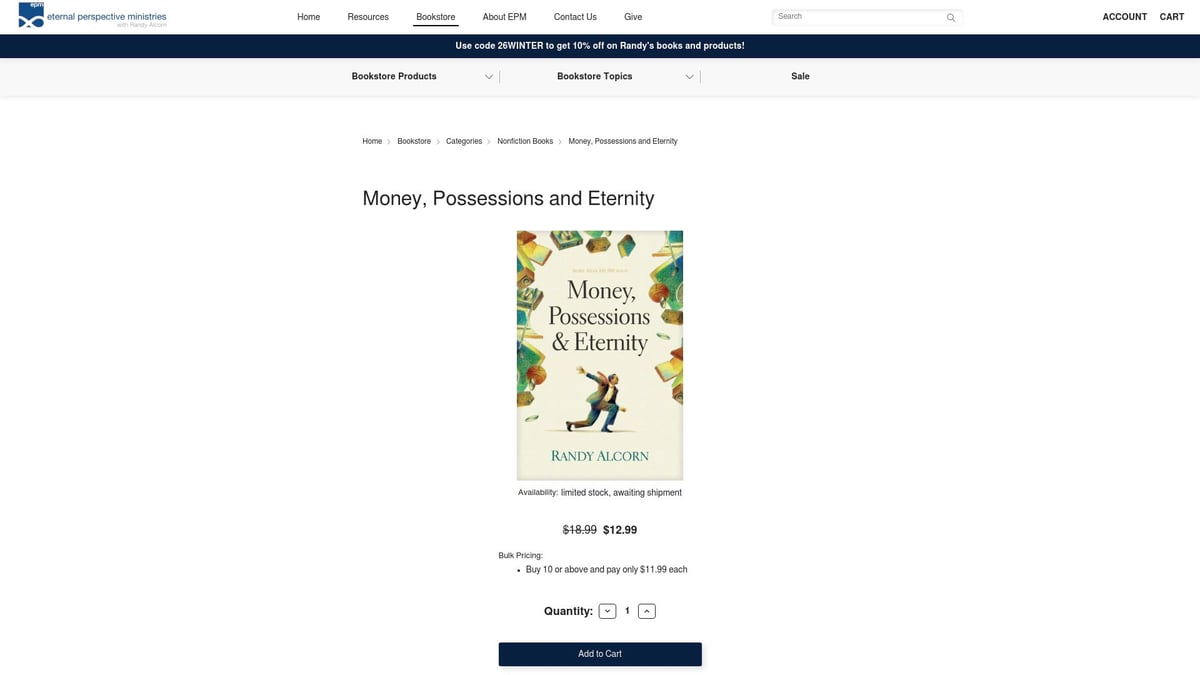
6. Money, Possessions, and Eternity by Randy Alcorn
Randy Alcorn’s in-depth theological work challenges materialism and calls readers to an eternal perspective, making it a cornerstone among christian books on finance for those seeking spiritual depth.
Quick Facts Table
| Feature | Details |
|---|---|
| Pricing | Approx. $19 |
| Core Features | Eternal perspective, in-depth theology |
| Target Audience | Christians seeking deeper understanding |
Key Benefits
- Encourages kingdom-minded living
- Rich scriptural exploration
Pros
- Theologically robust
Cons
- Lengthy and dense
For readers who want to move beyond surface-level advice, this is one of the most thoughtful christian books on finance available today.
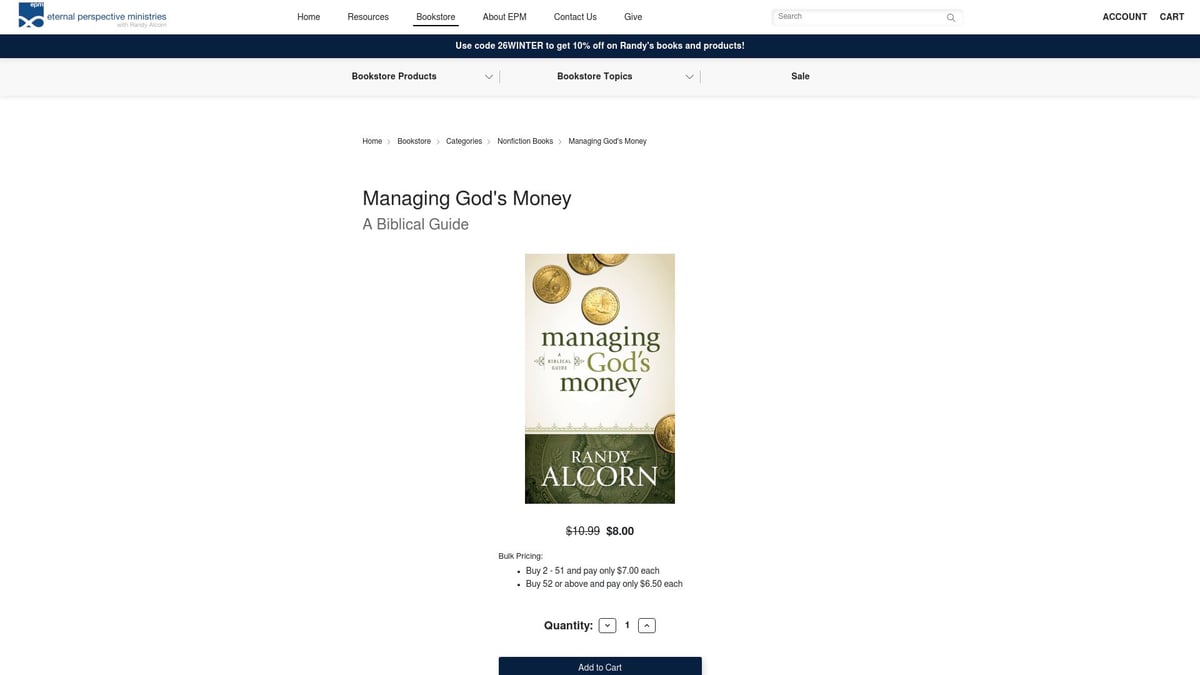
7. Managing God's Money: A Biblical Guide by Randy Alcorn
Alcorn’s second entry is more accessible and practical, making it an ideal introduction to biblical stewardship among christian books on finance.
Quick Facts Table
| Feature | Details |
|---|---|
| Pricing | Around $15 |
| Core Features | Practical tips, Q&A format |
| Target Audience | Families, new believers |
Key Benefits
- Simple, actionable advice
- Easy to read and apply
Pros
- Accessible for all readers
Cons
- Less depth than other works
This book is perfect for those just beginning their journey with christian books on finance and looking for clear, biblical answers.
8. Rich Christians in an Age of Hunger: Moving from Affluence to Generosity by Ronald J. Sider
Sider’s influential book calls Christians to address global poverty, making it a challenging and essential read among christian books on finance.
Quick Facts Table
| Feature | Details |
|---|---|
| Pricing | Approx. $22 |
| Core Features | Global poverty, Christian responsibility |
| Target Audience | Mission-minded Christians |
Key Benefits
- Promotes social justice through giving
- Offers practical solutions to affluence
Pros
- Thought-provoking, challenging
Cons
- May push readers outside comfort zones
For anyone seeking christian books on finance that connect faith with action, Sider’s book is a powerful catalyst for change.
9. Faith-Based Family Finances: Let Go of Worry and Grow in Confidence by Ron Blue & Jeremy White
This family-oriented guide is a reliable choice among christian books on finance, addressing the unique needs of Christian parents and couples.
Quick Facts Table
| Feature | Details |
|---|---|
| Pricing | About $16 |
| Core Features | Family budgeting, faith integration |
| Target Audience | Parents, couples |
Key Benefits
- Reduces financial anxiety
- Offers practical budgeting tools
Pros
- Family-centric advice
Cons
- Limited for single individuals
Blue and White’s approach makes this book a trusted reference for anyone managing household finances with biblical principles.
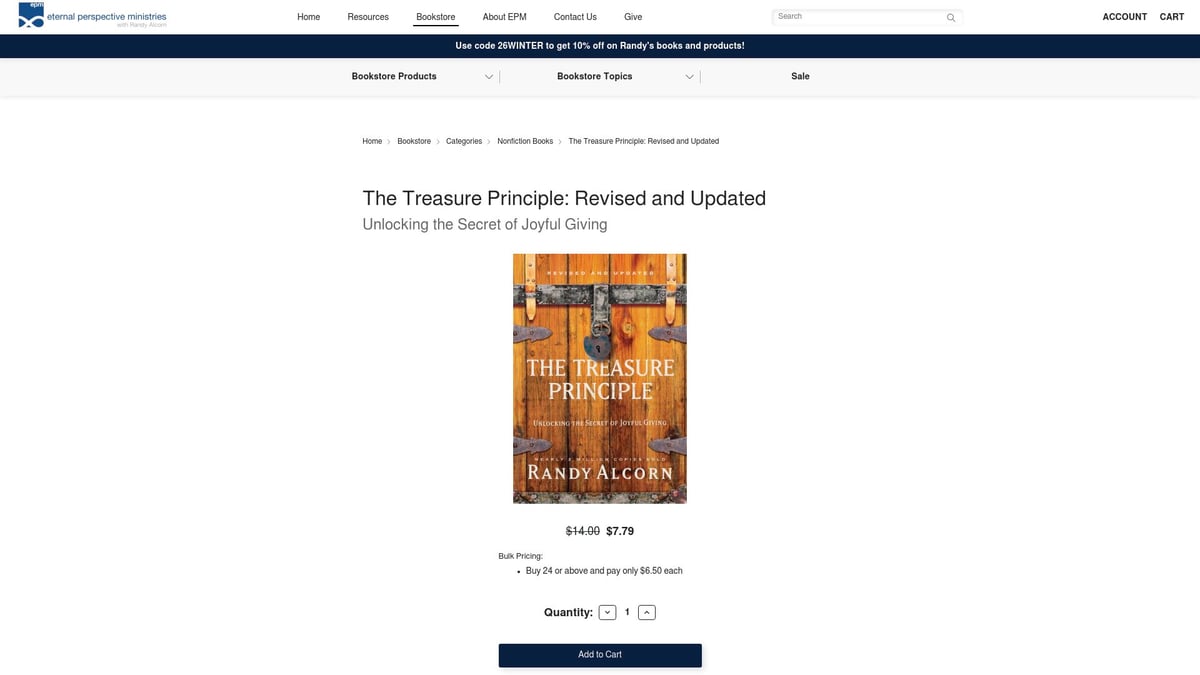
10. The Treasure Principle: Unlocking the Secret of Joyful Giving by Randy Alcorn
Short, powerful, and focused on joyful giving, The Treasure Principle is an accessible entry among christian books on finance for readers new to stewardship.
Quick Facts Table
| Feature | Details |
|---|---|
| Pricing | Around $10 |
| Core Features | Concise, generosity focus |
| Target Audience | New stewards, small groups |
Key Benefits
- Easy to understand and apply
- Inspires generous living
Pros
- Brief, impactful
Cons
- Narrow focus on giving
This book is often recommended to small groups and individuals beginning their journey through christian books on finance.
Exploring these christian books on finance is a valuable step toward greater stewardship and generosity. For those interested in discovering additional resources curated specifically for faith-driven leaders, the Christian Leaders Book Collection offers a robust selection of guides on biblical financial wisdom.
Each of these titles equips you with practical tools and spiritual insight, helping you honor God with your finances in every season.
How to Apply Christian Financial Principles from These Books
Applying the wisdom found in christian books on finance can lead to lasting transformation for individuals, families, and communities. By breaking down the main principles into actionable steps, readers can move from inspiration to tangible results in their financial lives.
Creating a Personal Stewardship Plan
A personal stewardship plan is the first step toward aligning your finances with biblical values. Begin by prayerfully reflecting on your current financial state and setting goals that honor God. Assess your income, expenses, debts, and giving patterns.
Consulting trusted christian books on finance can provide a clear framework for budgeting and financial planning. For foundational principles, the Christian Foundation Guide offers valuable guidance on integrating faith into every financial decision.
List out your short- and long-term goals, and ensure they reflect both practical needs and spiritual convictions. Review your plan regularly to stay on course and adjust as life changes.
Building Generosity and Giving Habits
Generosity is a core biblical value, and christian books on finance emphasize its importance for spiritual health. Start by committing to regular giving, whether through tithing, supporting missions, or helping those in need.
According to the Christian Giving Statistics Report 2025, many believers find joy and fulfillment through consistent generosity. Set aside a portion of your income specifically for giving, and look for creative ways to bless others.
Track your progress, celebrate milestones, and share stories within your community to inspire a culture of generosity.
Overcoming Common Financial Challenges
Many readers turn to christian books on finance when facing debt, budgeting struggles, or financial anxiety. Begin by identifying the root causes of your challenges, such as overspending or lack of planning.
Use practical tools like the debt snowball method, zero-based budgeting, and regular financial check-ins. Lean on scriptural encouragement and prayer to stay motivated during setbacks.
Seek accountability from trusted friends or church groups, and remember that setbacks are part of the learning process. Remain steadfast and patient as you pursue financial freedom.
Integrating Lessons into Family and Community Life
The teachings from christian books on finance are most effective when shared within families and church communities. Teach children about stewardship through age-appropriate discussions and involve them in giving decisions.
Encourage open conversations about money with your spouse or small group. Consider forming study groups focused on biblical finance topics to build mutual support.
Regularly revisit these principles together, fostering a culture where financial wisdom and faith grow hand in hand.
Frequently Asked Questions about Christian Finance Books
What Makes a Finance Book “Christian”?
Christian books on finance stand apart from secular financial guides by grounding their advice in biblical principles. These books emphasize stewardship, generosity, and faithfulness, drawing on Scripture to shape financial decision-making. Rather than focusing solely on wealth accumulation, christian books on finance encourage readers to align their money habits with their spiritual values. If you are looking for additional faith-based resources, the Finance Leaders Book Collection offers a curated selection for deeper study.
Are These Books Suitable for All Denominations?
Most christian books on finance are intentionally written for a broad Christian audience, making them accessible to readers from various traditions. While some titles may reflect specific denominational nuances, the core message of stewardship and biblical wisdom remains universal. Whether you are Protestant, Catholic, or from another tradition, these books provide practical and spiritual guidance for everyone seeking to honor God with their finances.
How Often Should I Revisit These Books?
It is beneficial to revisit christian books on finance regularly, as financial circumstances and spiritual growth evolve over time. Many readers find value in annual reviews or group studies, which foster accountability and deeper understanding. Repeated reading helps reinforce biblical principles and keeps financial goals aligned with faith. Small groups, families, or church classes can use these books as ongoing resources for discussion and growth.
Can These Books Help with Modern Financial Issues?
Absolutely. Many christian books on finance are updated to address current economic realities, including digital finance, inflation, and changing job markets. For example, recent research on Financial Literacy and Retirement Fluency in America highlights the growing need for practical, faith-based financial education. Authors often include online resources or new editions to ensure readers are equipped for today’s challenges.
As you reflect on these essential Christian books on finance, remember that building your financial wisdom is a journey—one that blends faith, stewardship, and practical action. Whether you’re looking to deepen your understanding, lead your family well, or guide your church community, the right resources make all the difference. If you’re ready to discover even more faith-based insights and titles designed to help you grow in both leadership and financial stewardship, I encourage you to explore our curated collection of Finance Leadership Books. Let’s take the next step together toward financial confidence and lasting impact.
0 comments