

In a world where change is constant and uncertainty defines the business landscape, leaders are searching for timeless strategies that deliver results. Abraham Lincoln’s approach remains as relevant as ever for those seeking to navigate the complexities of 2026.
This guide draws on the enduring wisdom of the lincoln on leadership book to reveal actionable insights for today’s leaders. You will discover how Lincoln’s values, people-first mindset, communication mastery, adaptability, accountability, and mentorship can unlock unparalleled success.
Are you ready to lead with greater impact? Explore proven lessons that will empower you to overcome modern challenges and thrive in the dynamic environment ahead.
The Foundation of Lincoln’s Leadership Philosophy
Understanding the foundation of Lincoln’s leadership philosophy provides valuable context for anyone seeking to master the principles found in the lincoln on leadership book. Lincoln’s journey from humble beginnings to national prominence reveals how personal adversity, strong values, and a deep sense of empathy shaped his approach to leadership.

Lincoln’s Early Influences and Values
Lincoln’s early life was marked by hardship and loss. Growing up in a log cabin, he experienced poverty and the death of his mother at a young age. These challenges instilled in him a sense of humility and resilience that would later become central themes in the lincoln on leadership book.
Honesty was a cornerstone of Lincoln’s character. His reputation as “Honest Abe” was not just a nickname but a reflection of his unwavering commitment to truthfulness. This dedication to integrity helped him earn trust from both allies and adversaries.
Empathy also played a crucial role in shaping Lincoln’s leadership. He had a remarkable ability to connect with people from all walks of life, understanding their struggles and aspirations. This empathy, combined with his personal hardships, gave him a unique perspective on human nature.
Lincoln’s values were evident in his actions and decisions. He believed that leadership required a deep sense of responsibility to others. The lincoln on leadership book illustrates how these traits formed the bedrock of his enduring influence.
Key Traits That Defined Lincoln’s Leadership
Several defining traits set Lincoln apart as a leader. Integrity remained at the core of his leadership style. He consistently stood by his principles, even when facing intense criticism or political pressure, a theme thoroughly explored in the lincoln on leadership book.
Persistence was another hallmark of Lincoln’s character. Despite repeated setbacks, both personally and professionally, he demonstrated resilience and an unyielding drive to achieve his goals. This persistence inspired those around him and built confidence in his leadership.
Empathy was not just an abstract quality for Lincoln, but a practical tool for building relationships. He spent significant time meeting with people, listening to their concerns, and offering support. This approach fostered trust and loyalty among his team.
Lincoln’s commitment to learning set him apart from many contemporaries. He was largely self-taught, spending countless hours reading and expanding his knowledge. This habit of continuous self-improvement directly influenced his decision-making and adaptability, making the lincoln on leadership book a valuable resource for those seeking personal growth.
Modern Leadership Takeaway
The foundational traits highlighted in the lincoln on leadership book remain highly relevant for leaders in 2026. In a world defined by rapid change and uncertainty, values like integrity, empathy, and resilience are more important than ever.
Leaders who embody these qualities inspire loyalty and long-term commitment from their teams. The universality of Lincoln’s approach is evident when comparing him to other influential figures, as seen in the Thought Leaders Collection. His legacy demonstrates that leadership rooted in strong personal values has lasting impact, regardless of era.
Modern organizations can draw direct lessons from Lincoln’s example. By prioritizing honesty, empathy, and a commitment to learning, today’s leaders can create environments where trust and innovation thrive. The lincoln on leadership book offers a timeless blueprint for anyone seeking to lead with purpose and authenticity.
People-Centric Leadership: Building Strong Relationships and Teams
Modern leaders searching for effective strategies in the lincoln on leadership book will quickly discover that people-centric leadership is the cornerstone of organizational success. Lincoln’s unique approach—marked by genuine visibility and accessibility—remains a model for leaders aiming to build strong, resilient teams. His practice of spending as much as 75% of his time engaging with people, from cabinet members to common citizens, established a foundation of trust and collaboration. This philosophy closely mirrors the Human-Centric Leadership Model, which emphasizes empathy and open communication as drivers of transformation. Lincoln’s open-door policy and informal conversations broke down barriers, making him approachable and reinforcing his reputation as a leader who truly listened.

Visibility and Accessibility as Core Practices
Lincoln’s leadership style was defined by his willingness to be present and accessible. He prioritized face-to-face interactions, believing that personal engagement fostered deeper understanding and loyalty. In the lincoln on leadership book, this is exemplified by his frequent visits to the front lines, informal chats with soldiers, and daily meetings with citizens. These actions not only humanized him but also provided real-time insights into the needs and concerns of his followers.
In today’s remote and hybrid work environments, leaders can adapt Lincoln’s approach by holding regular virtual office hours, encouraging open dialogue, and making themselves available for spontaneous conversations. By being visible and accessible, leaders create a culture of openness where team members feel valued and heard.
Building Trust and Fostering Loyalty
Trust is the bedrock of any high-performing team. The lincoln on leadership book highlights how Lincoln invested significant time in building trust with his cabinet, generals, and the public. He listened attentively, treated everyone with fairness, and honored his commitments, earning the lasting loyalty of those around him.
Modern leaders can follow his example by actively seeking input from team members, addressing concerns promptly, and demonstrating consistency in their actions. When employees believe their leaders genuinely care about their well-being, they are more likely to remain loyal and committed to organizational goals. Trust, once established, becomes a powerful force that unites teams through challenges.
Effective Communication and Clarity
Lincoln’s mastery of communication is a central theme in the lincoln on leadership book. He was renowned for delivering clear, honest messages, whether addressing the nation or speaking privately with individuals. His Gettysburg Address remains a timeless example of concise, impactful communication that inspires action and unity.
Effective leaders today must embrace clarity in both written and spoken communication. Sharing a clear vision, providing regular updates, and reinforcing core values help teams stay aligned and motivated. The consistency of Lincoln’s messaging ensured that everyone, from generals to ordinary citizens, understood the mission and their role in achieving it.
Encouraging Innovation and Empowerment
A hallmark of Lincoln’s leadership, as emphasized in the lincoln on leadership book, was his openness to new ideas and willingness to empower others. He welcomed diverse perspectives within his administration, delegated significant authority to trusted generals, and encouraged initiative at all levels.
To foster innovation, modern leaders should create environments where experimentation is valued and failure is accepted as a learning opportunity. Encouraging team members to propose solutions and take ownership of projects leads to greater engagement and creative breakthroughs. Lincoln’s example demonstrates that innovation thrives in cultures where input is respected and empowerment is the norm.
Handling Criticism and Conflict with Grace
Lincoln’s pragmatic approach to criticism is another lesson from the lincoln on leadership book. He distinguished between constructive feedback and petty complaints, focusing on major issues while ignoring distractions. His ability to navigate political opposition and personal attacks with composure set a standard for emotional intelligence in leadership.
In today’s workplace, leaders face constant scrutiny and rapid change. By responding to criticism calmly and using it as an opportunity for growth, leaders model resilience for their teams. Developing emotional intelligence enables leaders to manage conflict effectively, maintain workplace harmony, and reinforce a culture of respect.
Lessons for 2026 Leaders
The lincoln on leadership book offers enduring lessons for leaders facing the complexities of 2026. People-centric leadership is essential for managing multi-generational, diverse teams and guiding organizations through transformation. Empathy, visibility, and trust are more than ideals—they are practical tools for navigating change.
Leaders who adopt Lincoln’s approach foster environments where individuals feel supported and motivated to perform at their best. By prioritizing people, leaders not only achieve results but also build lasting legacies that inspire future generations.
The Power of Communication: Inspiring and Mobilizing Action
Effective communication is the heartbeat of exceptional leadership. The lincoln on leadership book demonstrates how Abraham Lincoln’s words and actions inspired a nation during its most challenging era. His approach to messaging, personal engagement, and vision-sharing offers a valuable blueprint for today’s leaders.

Mastering Public Speaking and Messaging
Lincoln’s speeches remain legendary, not only for their content but also for their delivery and lasting impact. The lincoln on leadership book explores how he meticulously prepared, focusing on clarity and brevity. His Gettysburg Address, for example, used only 272 words to unite a fractured country and inspire hope.
Modern leaders can learn from Lincoln’s commitment to purposeful messaging. He believed that every word should serve a clear goal. This principle applies today, where concise, passionate communication can rally teams and move organizations forward. Public speaking is not just about presenting information—it is about lighting a spark in others.
Personal Conversations and Relationship Building
Beyond the podium, Lincoln excelled in private conversations. The lincoln on leadership book highlights his talent for connecting with individuals one-on-one. He often met with generals, cabinet members, and citizens to address concerns, resolve conflicts, and encourage growth.
In the digital workplace, personalized communication is more important than ever. Leaders who take time for individual check-ins foster trust and commitment. Lincoln’s approach reminds us that a simple conversation can build loyalty and drive higher performance. Direct engagement creates bonds that withstand stress and uncertainty.
Consistency and Repetition of Vision
Lincoln understood that repeating a clear vision unites teams around shared goals. The lincoln on leadership book illustrates how he continually reinforced the values of unity and democracy, both in public addresses and private meetings. His relentless focus on the bigger picture helped people stay aligned during turbulent times.
Today, leaders must regularly communicate organizational priorities. Consistency builds confidence and ensures everyone moves in the same direction. By echoing core messages, leaders prevent confusion and keep teams motivated, even when challenges arise.
Communication in Crisis and Change
During the Civil War, Lincoln’s calm, transparent communication was critical. He addressed the nation’s fears honestly, while also providing hope and direction. The lincoln on leadership book shows how he navigated political and military crises with composure and clarity.
Modern leaders can draw from Lincoln’s example, especially in unpredictable environments. Maintaining executive presence and transparent messaging is essential when stakes are high. For deeper insights on Lincoln’s crisis leadership, see Executive Presence Under Pressure, which details how his steadiness inspired confidence during uncertain times.
Key Takeaways for Modern Leaders
To master communication, leaders should:
- Embrace storytelling to make messages memorable.
- Practice transparency, sharing both successes and setbacks.
- Use active listening to understand feedback.
- Reinforce vision at every opportunity.
- Personalize interactions to build trust.
The lincoln on leadership book teaches that communication is not just a skill, but the catalyst for transformation. By following Lincoln’s timeless example, leaders in 2026 can inspire action, build loyal teams, and guide organizations through any challenge.
Adaptability, Resilience, and Accountability in Leadership
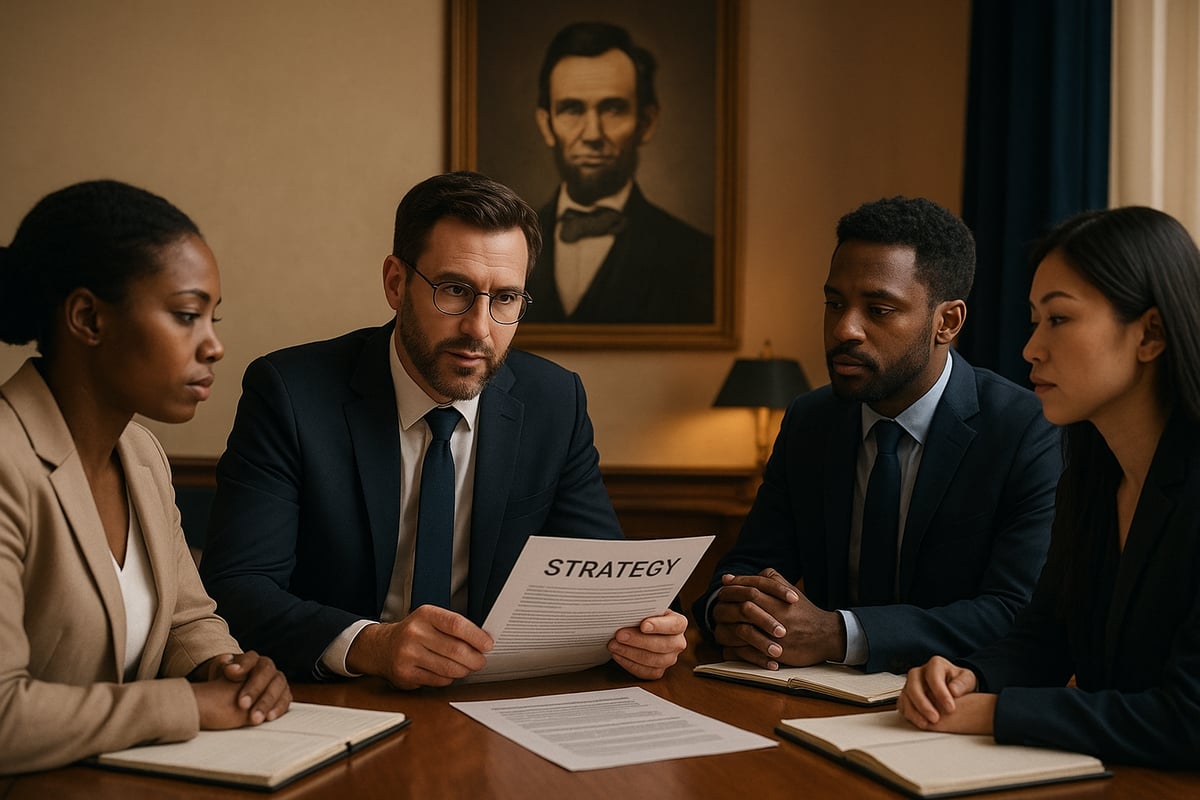
Adaptability, resilience, and accountability are at the heart of the lincoln on leadership book. These pillars empowered Lincoln to guide a nation through its most turbulent era. Today, they remain essential for leaders determined to thrive in rapidly evolving environments.
Proactive Adaptation to Change
Lincoln’s flexibility set him apart as a leader. He constantly reassessed strategies, especially during the Civil War, shifting military leadership when necessary to achieve the Union’s goals. This proactive adaptation is a central theme in the lincoln on leadership book.
Modern leaders face an unpredictable marketplace shaped by rapid technological advancements and social shifts. Like Lincoln, they must scan the horizon, anticipate changes, and adjust course without hesitation. Whether pivoting strategy or embracing new tools, adaptability is the foundation for sustained success.
Building Resilient Teams
Resilience is woven throughout the lincoln on leadership book. Lincoln cultivated teams that could endure setbacks, learn from failures, and emerge stronger. He supported his generals and cabinet members through adversity, reinforcing the belief that challenges are opportunities for growth.
Today’s leaders can foster resilience by promoting open communication, encouraging calculated risk-taking, and celebrating lessons learned from missteps. This mindset builds teams capable of weathering storms and capitalizing on change.
Creating a Culture of Accountability
The lincoln on leadership book highlights Lincoln’s insistence on accountability. He set clear expectations for his team and held them responsible for their actions, yet did so with fairness and respect. Delegating authority was paired with regular follow-up, ensuring tasks were completed and standards maintained.
Modern organizations benefit from a similar approach. By defining roles, establishing measurable goals, and following through, leaders build trust and drive consistent performance. Accountability is not about blame but about fostering ownership and excellence.
Providing Regular Feedback and Recognition
Consistent feedback is a recurring lesson in the lincoln on leadership book. Lincoln offered direct, constructive input through private letters and meetings, recognizing achievements and addressing concerns. This practice boosted morale and reinforced a sense of purpose.
Leaders today should prioritize timely, honest feedback. Recognizing contributions, both big and small, enhances motivation and loyalty. Feedback loops create an environment where continuous improvement is not just possible, but expected.
Embracing Innovation and Continuous Improvement
Innovation flourished under Lincoln’s guidance. The lincoln on leadership book illustrates how he welcomed new ideas, encouraged experimentation, and was open to unconventional solutions. He listened to diverse perspectives and empowered others to propose bold strategies.
For modern leaders, fostering a culture of innovation is critical. Encourage brainstorming sessions, pilot new approaches, and learn from every result. For actionable strategies on implementing these principles, explore Leadership Forum Insights for further guidance.
Lessons for Future-Proof Leadership
The lincoln on leadership book provides timeless lessons for building organizations that can withstand uncertainty. Embedding adaptability and accountability into company culture equips teams to tackle economic, social, and technological disruptions head-on.
To stay ahead, leaders should invest in ongoing learning, support agile decision-making, and champion transparent communication. For a curated list of resources that align with Lincoln’s philosophy and prepare you for 2026’s challenges, visit Business Leadership Books 2026.
Mentorship and Developing Future Leaders
The lincoln on leadership book highlights that mentorship is not just a supportive gesture, it is a strategic necessity for cultivating future leaders. Abraham Lincoln’s approach to leadership was deeply rooted in nurturing the next generation, ensuring his values and vision endured. In today’s rapidly evolving landscape, mentorship remains a vital pillar for organizational resilience and success.
The Role of Mentorship in Leadership Development
Mentorship played a central role in the lincoln on leadership book, with Lincoln known for investing time in his team’s growth. He identified promising talent and provided guidance that empowered individuals to rise to their full potential. Lincoln’s mentoring style included sharing personal experiences, offering honest feedback, and encouraging independent thought.
By focusing on individualized support, Lincoln fostered an environment where emerging leaders felt valued and motivated. His example demonstrates that mentorship is essential for building a legacy of capable, confident leaders.
Creating Opportunities for Growth
In the lincoln on leadership book, Lincoln’s method of developing leaders was proactive. He regularly assigned new responsibilities and stretch assignments to those ready for more. This approach not only built competence but also inspired engagement and loyalty.
To emulate Lincoln’s strategy, modern leaders should:
- Assign tasks that challenge team members’ abilities
- Promote based on merit and demonstrated potential
- Encourage cross-functional projects for broader experience
These practices ensure that future leaders are prepared for complex, evolving roles.
Giving Guidance, Feedback, and Support
Guidance and actionable feedback are hallmarks of the lincoln on leadership book. Lincoln’s communication was always personal and timely, whether through letters or face-to-face discussions. He provided constructive criticism, praised achievements, and addressed setbacks with empathy.
Effective mentorship today requires emotional intelligence and a commitment to open dialogue. Leaders who support their teams with honest feedback build trust and drive continuous improvement. For those interested in deepening this skill, the Emotional Intelligence in Leadership study offers valuable insights.
Fostering a Culture of Continuous Learning
A key insight from the lincoln on leadership book is Lincoln’s dedication to lifelong learning. He encouraged his team to pursue education and skill development, recognizing that continuous growth was vital for long-term success.
Modern organizations can replicate this by:
- Implementing leadership development programs
- Encouraging ongoing education and training
- Providing access to resources like Leadership Development Courses
Such investments empower individuals to adapt, innovate, and lead with confidence.
Action Steps for Modern Leaders
Translating lessons from the lincoln on leadership book into practice starts with identifying and nurturing future leaders. Establish formal mentorship programs, set clear development goals, and celebrate progress.
Actionable steps include:
- Pairing experienced leaders with emerging talent
- Creating feedback loops for ongoing growth
- Recognizing achievements to boost morale
By prioritizing mentorship, leaders build a sustainable pipeline of capable successors, ensuring organizational success for years to come.
As you reflect on Lincoln’s enduring leadership lessons—integrity, empathy, adaptability, and the power of mentorship—you might be inspired to elevate your own impact in 2026 and beyond. At LeadershipBooks.com, we’re passionate about helping leaders like you turn insights into real influence through publishing and online courses. If you’re ready to share your unique message, establish authority, and build a legacy that lasts, I invite you to take the next step. Let’s explore how your leadership journey can inspire others and shape the future. Get Started Here
Article written using RankPill.
0 comments